Returning to Work After a Career Break: Your Experience Still Counts
By Chad | Capitol Career Consulting · September 22, 2026
You open a job posting and recognize the work. You have managed projects like these, solved similar problems, and worked with teams facing the same challenges. Then you look at the dates on your résumé and wonder: How do I explain the time away?
Perhaps you left federal service through a deferred resignation program and took time to consider your next move. Perhaps your role in international development, a nonprofit, or education ended unexpectedly. Perhaps you stepped away from paid work to welcome a child, care for a family member, or address your own needs.
Some breaks are planned. Others begin with a decision someone else makes for you. Those experiences are different, but returning can raise similar questions: Where do I fit now? Are my skills still relevant? Who will give me a chance?
Start with this: Your experience still counts. Time away from paid employment does not erase the problems you have solved, the relationships you have built, or the judgment you have developed. The task now is to connect that experience to what an employer needs—and to what you want from your next chapter.
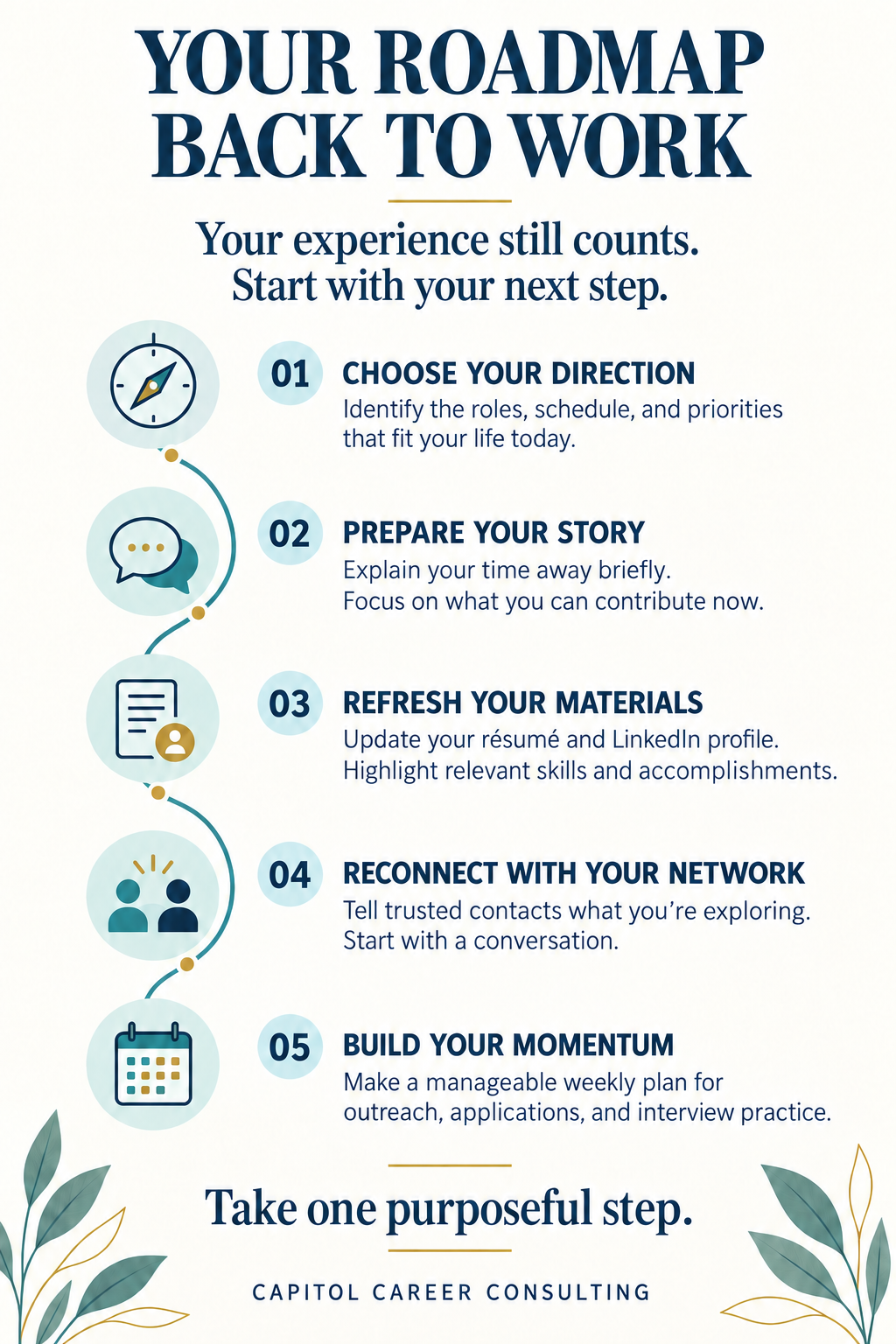
1. Choose your direction
Before updating every line of your résumé, decide what you are looking for. Returning to work does not have to mean returning to the exact job, sector, or schedule you left.
Ask yourself:
- What work do I want to keep doing, and what would I like to change?
- What income, benefits, and schedule do I need?
- Which strengths could I bring to a different organization or industry?
Choose one or two types of roles to explore first. Read several postings and look for recurring responsibilities and requirements. This gives your search a focus and helps you distinguish skills you already have from those you may need to refresh.
You do not need a perfect long-term plan before taking the first step.
2. Prepare your story
An interviewer may ask about your time away. Prepare a brief, truthful explanation that feels comfortable to say aloud. Explain the circumstances, describe your current direction, and connect your experience to the role.
Here are three examples to adapt to your actual situation:
After caregiving:
“I stepped away from paid work to care for my family. I’m now looking for a role where I can bring my project coordination and client service experience to a team like yours.”
After a position ended:
“My position was eliminated, and I’ve been considering where my experience would be most useful next. I’m focusing on roles that draw on my background in program management and partnerships.”
After a voluntary departure:
“After leaving federal service, I took time to consider my next direction. I’m now pursuing opportunities where I can apply my experience managing programs, budgets, and teams.”
Use only the details and skills that are true for you. You can keep personal circumstances brief without sharing intimate family or health information.
Keep employment dates accurate, too. For someone who participated in deferred resignation, paid administrative leave before the effective separation date is different from time after employment ended. Check your personnel records rather than using your last day of active duties as your employment end date.[1]
Your explanation should help an employer understand your path and what you can contribute now. It does not need to account for every week you were away.
3. Refresh your materials
Update your résumé and LinkedIn profile with your target roles in mind. Start with accomplishments that demonstrate the work you can do: a program you delivered, a process you improved, a budget you managed, or a partnership you built.
If you are changing sectors, explain your experience in language your new audience will understand. An agency acronym or internal program name may need a short description. Make the connection between your previous responsibilities and the employer’s needs clear.
If useful, include a simple entry such as “Career break—family caregiving” with accurate dates. Relevant coursework, volunteer work, or independent projects can also belong on your résumé when they reflect something you actually did. Label them honestly and distinguish them from paid employment.
You do not have to fill your break with credentials to justify it. If your target jobs reveal a specific skills gap, choose a focused way to address it. That might mean refreshing a software skill or practicing a task—not automatically enrolling in an expensive program.
4. Reconnect with your network
Reaching out can feel uncomfortable when you have been away. Begin with people who know your work: former colleagues, supervisors, classmates, professional contacts, and community connections.
Give them enough information to understand your direction. For example:
“Hi [Name], I hope you’re doing well. I’m returning to the job market and exploring program management roles with organizations focused on education or community services. I’d enjoy catching up and hearing your perspective on the field. Would you have 15 minutes for a conversation in the next couple of weeks?”
This gives the other person a specific, manageable request. During the conversation, ask about the work, the skills organizations value, and other people or resources that could help you learn more.
Follow up with a thank-you. When you put someone’s advice into practice, let them know. These conversations can help you refine your direction and rebuild professional connections while you continue applying for suitable roles.
5. Build your momentum
Create a weekly routine you can sustain alongside the rest of your life. An example starting point might be:
- Send three thoughtful outreach messages.
- Submit two applications tailored to roles that fit.
- Practice one interview answer aloud.
- Spend a short block of time refreshing a relevant skill.
Adjust those numbers to your circumstances and urgency. Track the actions you can control, and review what you are learning. If applications are not leading to conversations, revisit your targeting and materials. If interviews are difficult, focus your practice there.
Make room for the practical side of returning, too: childcare, transportation, work hours, and any ongoing caregiving responsibilities. A workable plan should reflect the life you actually have.
Take one purposeful step
Returning to work can bring hope, uncertainty, and frustration at the same time. You may need to refresh a skill, explain a transition, or explore a different direction. You also bring experience that deserves to be presented clearly.
This week, choose one action: identify a target role, revise a résumé accomplishment, or contact someone who knows your work.
You do not have to solve your entire career today. Start with your next step.
Need help planning your return? Capitol Career Consulting can help you clarify your direction, strengthen your résumé and LinkedIn profile, and prepare to tell your story with confidence. Get in touch to discuss your next move.
[1] Source for the deferred resignation distinction: U.S. Office of Personnel Management, Guidance Regarding Deferred Resignation Program, January 28, 2025. The guidance describes paid administrative leave before the effective resignation date; individual employment dates should be confirmed from personnel records.